
Drum Washers for Industrial Parts Cleaning
What Is a Drum Washer?
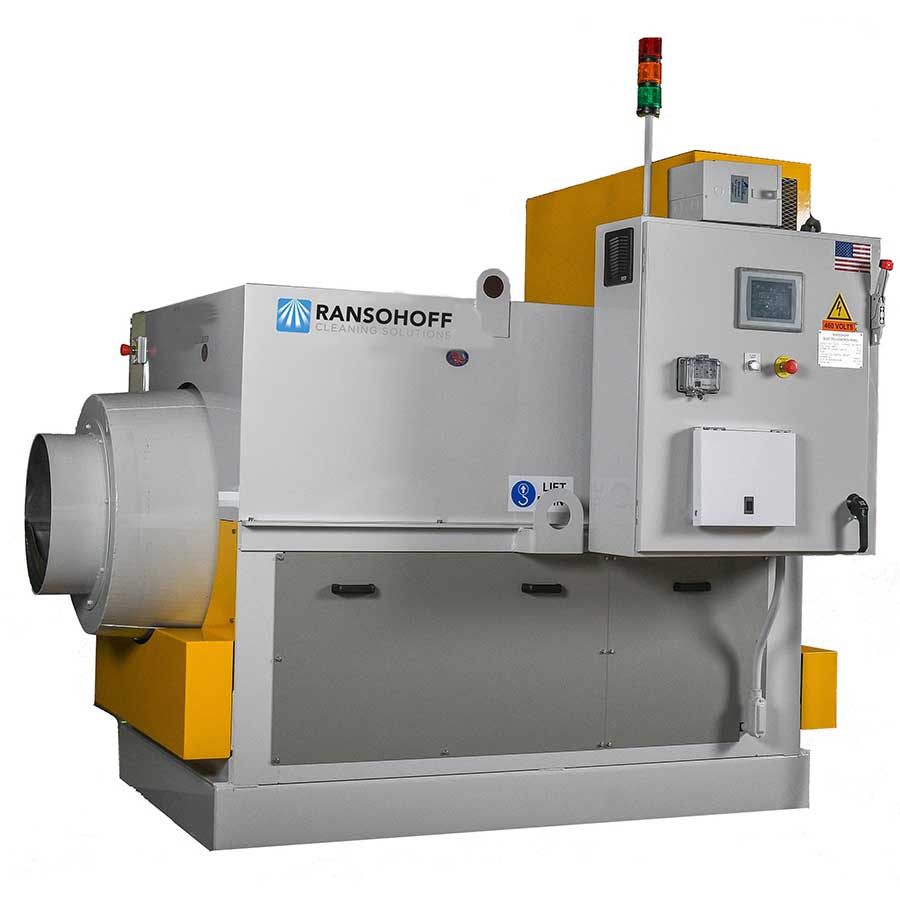
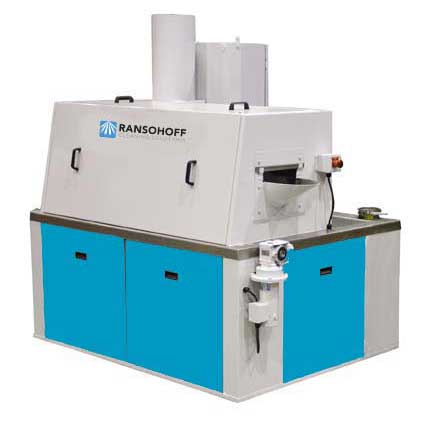
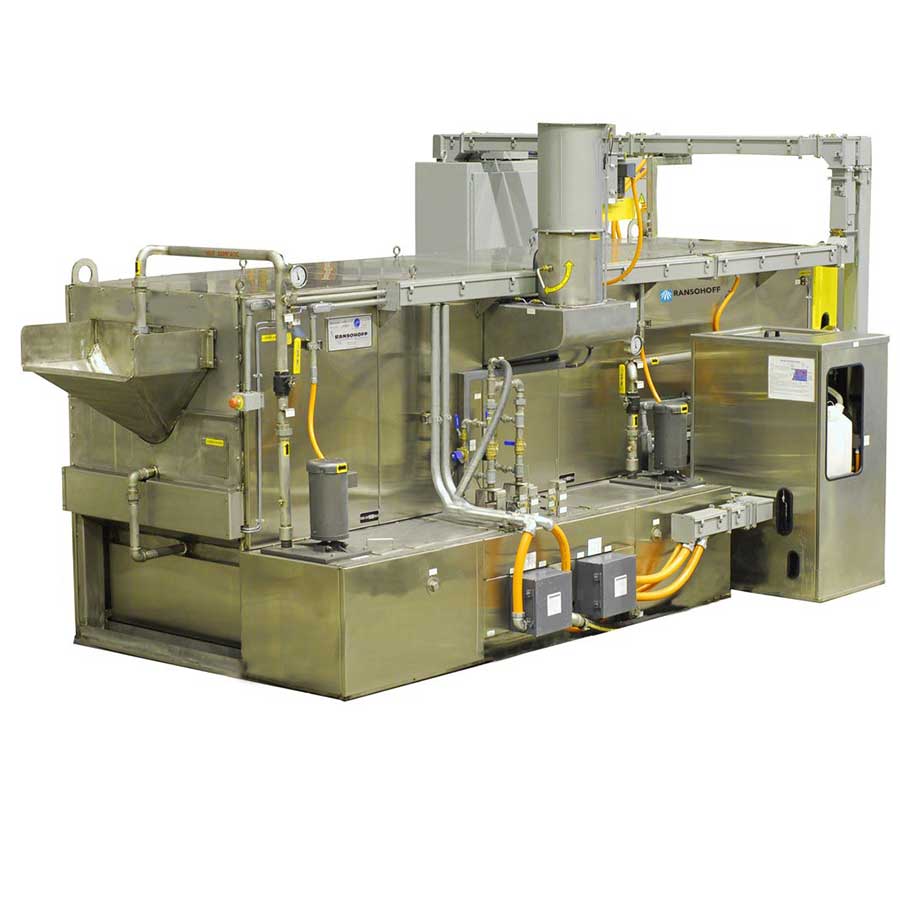
A drum washer is an industrial parts cleaning system that uses a rotating drum combined with spray cleaning technology to clean large volumes of parts in a continuous or semi-continuous process.
As parts move through the rotating drum, they are exposed to heated aqueous spray, allowing for consistent and efficient removal of contaminants such as oils, chips, and debris. Drum washers are commonly used in high-volume manufacturing environments where throughput, automation, and consistency are critical.


How Drum Washers Work
Drum washers use a simple but highly effective cleaning process designed for continuous operation:
- Step 1: Load Parts
Bulk parts are fed into the rotating drum, either manually or via automated infeed systems. - Step 2: Drum Rotation Begins
The drum rotates, tumbling parts to expose all surfaces during cleaning. - Step 3: Spray Cleaning
Heated aqueous solution is sprayed through nozzles positioned along the drum. - Step 4: Contaminant Removal
Oils, chips, and debris are washed away as parts move through the system. - Step 5: Rinse Stage (Optional)
Clean water rinses remove any remaining detergent or residues. - Step 6: Drying Stage (Optional)
Heated air or blow-off systems prepare parts for downstream processes.
When to Use a Drum Washer
Drum washers are ideal for applications that require:
- High-volume parts cleaning
- Continuous or automated processing
- Bulk handling of small-to-medium sized parts
- Consistent cleaning results with minimal manual handling
- Integration into production lines
They are particularly effective when parts can be tumbled without risk of damage, allowing for efficient cleaning of large quantities at once.
Drum Washer Applications by Industry
Drum washers are widely used across industries where throughput and efficiency are essential:
- Automotive Manufacturing Cleaning fasteners, stampings, and machined components in high volumes
- Metalworking & Fabrication Removing oils, chips, and debris from bulk parts
- Fastener & Hardware Production Processing large quantities of small components efficiently
- General Manufacturing Preparing parts for coating, assembly, or packaging
Drum Washers vs Conveyor Washers
While both drum washers and conveyor washers support high-volume cleaning, their operation differs:
Drum Washers:
- Use tumbling action to expose parts to spray
- Ideal for bulk, smaller parts
- Efficient for continuous, high-throughput cleaning
Conveyor Washers:
- Move parts on a belt or fixture through cleaning stages
- Better for larger, delicate, or orientation-sensitive parts
- Provide more controlled part handling
Drum Washers vs Cabinet Washers
Drum washers and cabinet washers serve different operational needs:
Drum Washers:
- Continuous or semi-continuous operation
- High throughput for bulk parts
- Designed for automation
Cabinet Washers:
- Batch processing
- More flexible for varying part sizes
- Ideal for lower-volume or mixed-part applications
Key Features to Look for in a Drum Washer
When evaluating a drum washer system, consider:
- Drum size and capacity
- Rotation speed and tumbling control
- Spray pressure and nozzle configuration
- Filtration systems for extended solution life
- Optional rinse and drying stages
- Automation and integration capabilities
Benefits of Drum Washers
Drum washers provide several key advantages in industrial cleaning applications:
- High Throughput – Efficiently process large volumes of parts
- Automation-Friendly – Easily integrated into continuous production lines
- Consistent Cleaning Results – Uniform exposure to spray and tumbling action
- Reduced Labor Requirements – Minimizes manual handling and intervention
- Compact Continuous Design – Combines throughput with a relatively efficient footprint
Frequently Asked Questions About Drum Washers
What is a drum parts washer used for?
Drum parts washers are used to clean large volumes of small-to-medium components by tumbling them in a rotating drum while applying heated spray cleaning.
What industries use drum washers?
They are commonly used in automotive, fastener manufacturing, metalworking, and general industrial production environments.
Are drum washers continuous or batch systems?
Most drum washers are designed for continuous or semi-continuous operation, making them ideal for high-throughput applications.
What types of parts work best in a drum washer?
Parts that can withstand tumbling—such as fasteners, stampings, and small machined components—are ideal for drum washer systems.
Why Choose Ransohoff Drum Washers?
Ransohoff drum washers are engineered to deliver high-throughput, reliable cleaning performance in demanding industrial environments. With a focus on automation and efficiency, Ransohoff systems are designed to:
- Handle large volumes of parts with consistent results
- Integrate seamlessly into production workflows
- Reduce labor while improving process efficiency
- Deliver long-term durability and performance
Ransohoff’s engineering expertise ensures that each drum washer system is configured to meet the specific requirements of your application.
Talk to Ransohoff About Your Drum Washer Needs
Selecting the right drum washer depends on your part size, material, throughput goals, and integration requirements.
The Ransohoff team can help you determine the best configuration for your operation and ensure your system delivers reliable, repeatable results.
Contact Ransohoff today to discuss your drum washer application and find the right solution for your facility.