Key Takeaways
- Aging parts cleaning systems can quietly reduce throughput, increase scrap, and create quality inconsistencies.
- Common warning signs include rising maintenance costs, inconsistent cleanliness results, excessive downtime, and higher utility consumption.
- Modern aqueous cleaning systems can improve automation, repeatability, energy efficiency, and process control.
- The right upgrade path depends on production volume, part complexity, contamination type, and available floor space.
- Ransohoff cleaning systems support manufacturers seeking cleaner parts, reduced labor involvement, and more predictable production performance.
- Evaluating your current process before failure occurs can help avoid costly production interruptions and reactive equipment replacement.
Why Many Parts Cleaning Systems Become Production Bottlenecks
In many manufacturing environments, parts cleaning equipment is expected to operate quietly in the background. As long as parts appear clean enough to move downstream, the system rarely receives much attention.
Over time, however, older cleaning systems often become hidden production bottlenecks.
As production demands increase and quality expectations tighten, legacy cleaning systems may struggle to keep up with throughput requirements, contamination challenges, and process consistency expectations. What once worked adequately may now contribute to longer cycle times, increased rework, maintenance headaches, and unnecessary operating costs.
For manufacturers in industries such as automotive, aerospace, medical device manufacturing, precision machining, and general industrial production, upgrading the parts cleaning process can create measurable improvements in productivity and part quality.
The key is knowing when an upgrade is necessary and selecting the right cleaning technology for the application.
Signs Your Parts Cleaning Process May Need an Upgrade
Many facilities continue operating outdated cleaning equipment long after performance has begun to decline. Because the degradation often happens gradually, it can be difficult to recognize how much inefficiency has entered the process.
Inconsistent Cleaning Results
One of the clearest signs of an outdated cleaning process is inconsistent cleanliness.
Residual oils, chips, particulate contamination, or failed cleanliness inspections can indicate that the cleaning system no longer matches the production environment or contamination load. Inconsistent cleaning results can create downstream issues involving coating adhesion, assembly reliability, welding quality, and final product performance.
When operators regularly need to rerun parts through the washer or manually clean components after processing, the system may no longer be capable of supporting current production standards.
Increasing Downtime and Maintenance Costs
Older systems often require increasing maintenance attention to remain operational.
Common warning signs include:
- Frequent pump failures
- Spray nozzle clogging
- Conveyor alignment problems
- Heating inefficiencies
- Tank contamination buildup
- Leaking seals and plumbing components
- Obsolete controls or unavailable replacement parts
As maintenance demands increase, unplanned downtime becomes more likely. In high-volume manufacturing environments, even short interruptions can disrupt production schedules and increase operational costs.
Rising Energy and Water Consumption
Legacy cleaning systems are frequently less energy efficient than newer technologies.
Older systems may:
- Use more water than necessary
- Require excessive heating energy
- Operate without optimized filtration systems
- Lack efficient drying capabilities
- Use outdated motors and controls
Modern cleaning systems can significantly reduce utility usage while improving process consistency.
Throughput Limitations
Production growth often exposes limitations in older cleaning equipment.
A system originally sized for previous production volumes may no longer support current demand. Operators may begin staging parts, extending shifts, or delaying production simply because the cleaning system cannot keep pace.
When cleaning becomes the bottleneck in a manufacturing cell or production line, upgrading equipment can improve overall operational efficiency.
How Modern Parts Cleaning Technology Improves Manufacturing Performance
Today’s industrial cleaning systems are designed to support higher production expectations while improving process control and operational efficiency.
Modern aqueous parts washers can offer advantages that extend far beyond simply removing contamination.
Improved Process Consistency
Automated process controls help manufacturers achieve more repeatable cleaning performance.
Modern systems may include:
- Programmable wash cycles
- Precise temperature control
- Automated chemistry management
- Controlled spray pressure
- Advanced filtration systems
- Integrated drying stages
These features help reduce process variation and improve cleaning repeatability across production runs.
Better Integration with Automated Manufacturing
As manufacturers increase automation throughout production facilities, cleaning systems increasingly need to integrate with broader manufacturing workflows.
Modern systems can support:
- Robotic loading and unloading
- Conveyorized part handling
- Automated process sequencing
- Production data collection
- Reduced operator involvement
This integration can improve labor efficiency while supporting more consistent production output.
Reduced Environmental and Utility Impact
Many manufacturers are under increasing pressure to reduce energy use, water consumption, and waste generation.
Newer aqueous cleaning technologies often help facilities:
- Lower water usage
- Improve filtration and fluid management
- Reduce chemical consumption
- Minimize wastewater generation
- Improve energy efficiency
These improvements may support both operational cost reduction and environmental initiatives.
Choosing the Right Cleaning System Upgrade
Not every facility requires the same type of cleaning system.
Selecting the right upgrade involves evaluating several operational factors.
Part Geometry and Complexity
Complex components with blind holes, intricate passages, or detailed geometries may require different cleaning approaches than simple stamped or machined parts.
Immersion cleaning systems, ultrasonic technologies, spray systems, or multi-stage processes may be appropriate depending on contamination challenges and cleanliness requirements.
Production Volume Requirements
System sizing should align with both current and future production goals.
Facilities planning for expansion should consider whether the cleaning system can support anticipated throughput increases without requiring another near-term replacement.
Cleanliness Standards
Many industries require tighter cleanliness tolerances than general manufacturing applications.
Understanding particulate requirements, residual contamination limits, and downstream process sensitivity is critical when evaluating cleaning technology.
Available Floor Space
Manufacturing floor space is valuable.
Modern cleaning systems are often designed with improved layouts and more compact footprints compared to older systems. Facilities with limited space may benefit from systems optimized for smaller manufacturing cells while still delivering higher throughput.
When to Start Evaluating an Upgrade
Many manufacturers wait until a cleaning system experiences major failure before beginning the replacement process.
Unfortunately, reactive replacement decisions often create rushed equipment selection, unplanned downtime, and production disruption.
A better approach is evaluating cleaning process performance before critical failures occur.
Facilities should consider reviewing their cleaning process when they notice:
- Increased quality issues
- Higher maintenance frequency
- Production bottlenecks
- Utility cost increases
- Expanding throughput requirements
- New cleanliness specifications
- Greater automation goals
Early evaluation allows manufacturers to identify opportunities for process improvement while creating a more strategic equipment transition plan.
Parts Cleaning Systems Play a Crucial Role in Manufacturing Performance
When cleaning equipment begins limiting throughput, increasing maintenance demands, or creating inconsistent results, upgrading the process can improve productivity, quality, and operational reliability.
Modern cleaning technologies offer manufacturers opportunities to improve process control, reduce utility consumption, support automation, and better align cleaning performance with today’s production demands.
For manufacturers evaluating ways to improve cleaning consistency and production efficiency, Ransohoff offers industrial cleaning technologies designed to support long-term manufacturing performance.
How Ransohoff Technology Supports Cleaning Process Upgrades
Ransohoff designs and manufactures industrial cleaning systems for manufacturers seeking reliable, repeatable cleaning performance across a wide range of applications.
Depending on production requirements, manufacturers may benefit from technologies such as:
- Cabinet washers for batch cleaning applications
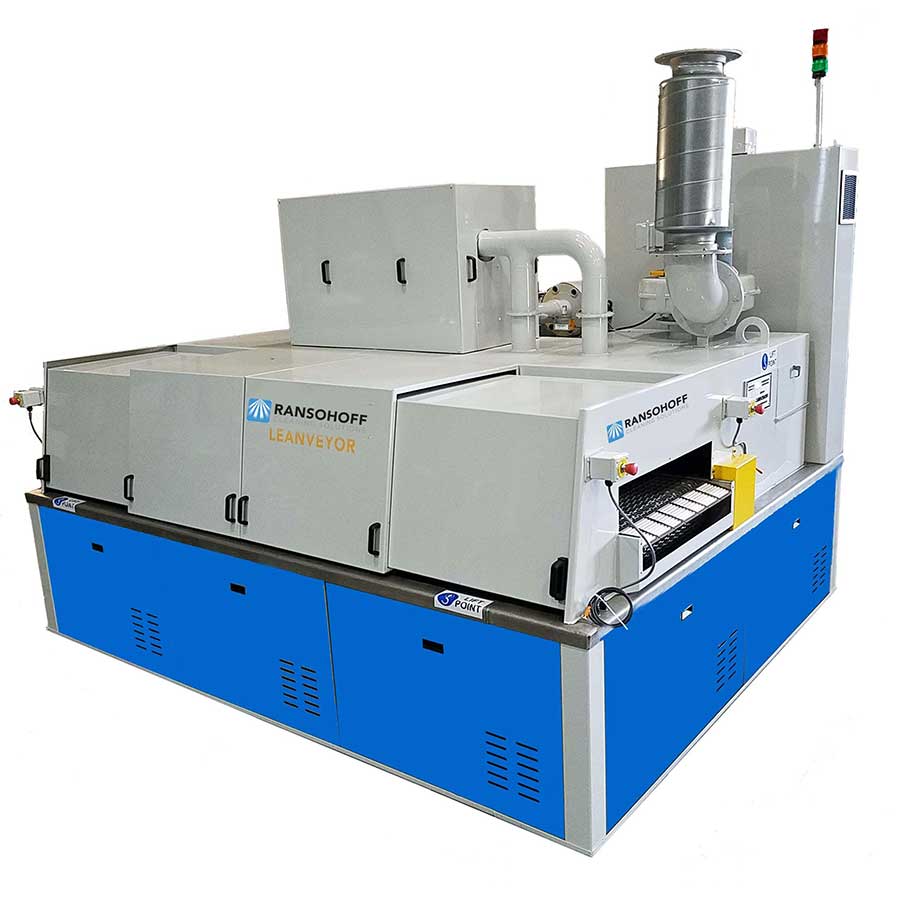
- Conveyorized systems for continuous production environments
- Rotary basket washers for high-throughput processing
- Immersion cleaning systems for complex geometries
- Multi-stage aqueous cleaning systems for higher cleanliness standards
For some manufacturers, a complete equipment replacement may offer the best long-term path toward improved throughput, efficiency, automation, and cleaning consistency. However, in certain situations, retooling or modernizing an existing parts washer may also provide meaningful operational improvements.
Ransohoff can help manufacturers evaluate opportunities to upgrade older systems with newer controls, updated components, improved process capabilities, and other enhancements that may improve machine efficiency and extend equipment usefulness.
Whether a facility is considering a fully new cleaning system or selective modernization of existing equipment, Ransohoff systems and services are designed to help manufacturers improve process consistency, support production efficiency, and reduce long-term operational challenges associated with aging cleaning equipment.
To learn more about upgrading your parts cleaning process, contact Ransohoff to discuss your application requirements and production goals.