Key Takeaways
- Compact cabinet washers maximize cleaning performance in limited floor space
- Ideal for cell-based manufacturing, lean layouts, and decentralized production
- Reduce part handling and transport between operations
- Support consistent cleanliness without large system complexity
- Improve workflow efficiency and operator productivity
- Configurable options allow scalability as production needs grow
Choosing a Cabinet Washer for Small or Cell-Manufacturing Environments
As manufacturing environments continue to evolve toward leaner, more flexible production models, space has become one of the most valuable resources on the shop floor. Cell manufacturing, in particular, prioritizes efficiency, minimal movement, and localized operations, all of which create new challenges when integrating essential processes like parts cleaning.
For many operations, the question is no longer whether to include a cleaning system, it’s how to fit one in without disrupting the flow of production. This is where small footprint cabinet washers offer a practical and highly effective solution.
Why Space Matters in Cell Manufacturing Environments
Cell manufacturing is designed to streamline production by grouping equipment and processes into tight, efficient work zones. The goal is to:
- Minimize material handling and transportation
- Reduce work-in-progress inventory
- Improve throughput and cycle times
- Enable operators to manage multiple steps within a single area
However, these benefits can be undermined if supporting equipment, like parts washers, requires excessive space or forces parts to be moved outside the cell.
A large, centralized washing system may deliver high throughput, but it often introduces inefficiencies such as:
- Increased handling time
- Higher risk of contamination between steps
- Workflow interruptions
- Bottlenecks between production stages
Small footprint cabinet washers help solve these issues by bringing cleaning directly into the cell.
What Defines a “Small Footprint” Cabinet Washer?
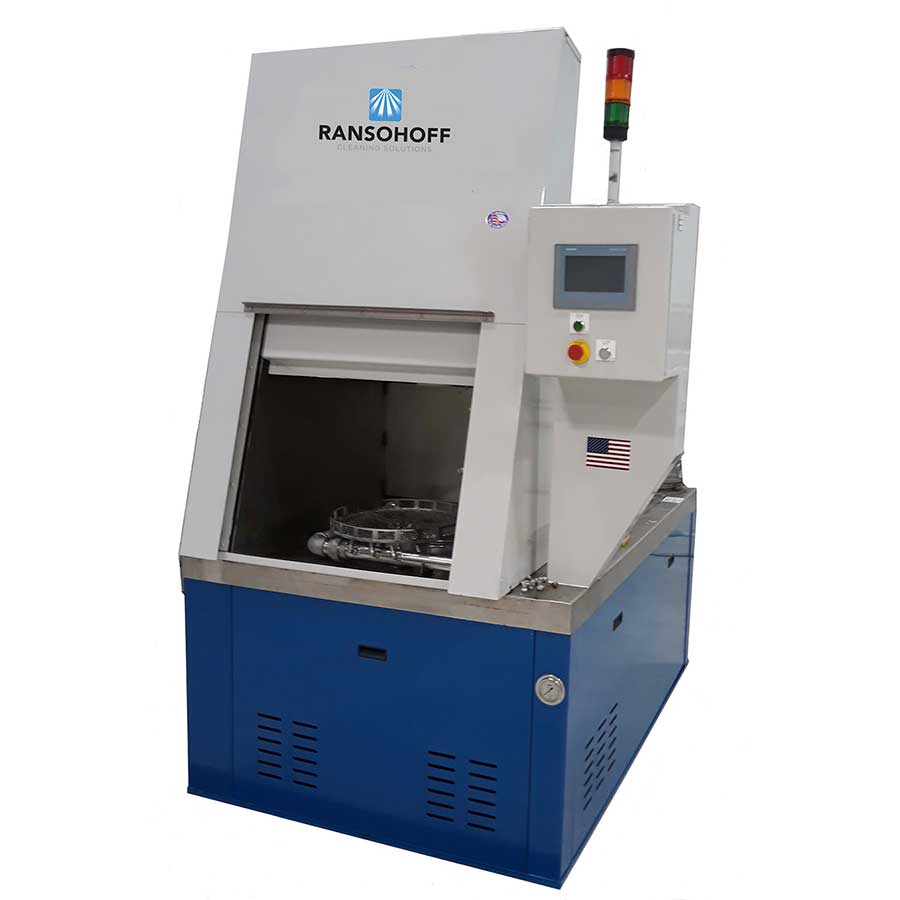
A small footprint cabinet washer is designed to deliver industrial-grade cleaning performance within a compact, space-efficient design. These systems are engineered to fit seamlessly into constrained layouts without sacrificing effectiveness.
Key characteristics include:
- Reduced overall footprint to fit within tight production cells
- Vertical or space-saving configurations
- Integrated tanks, pumps, and filtration systems
- Front-loading or top-loading access for ergonomic operation
- Self-contained operation with minimal external utilities
The result is a cleaning solution that complements the production environment rather than competing with it for space.
Key Benefits of Compact Cabinet Washers
1. Improved Workflow Efficiency
By placing the cleaning process directly within the manufacturing cell, parts can move seamlessly from one step to the next without delays.
- Eliminates unnecessary transport between departments
- Reduces handling time and labor costs
- Keeps production flowing smoothly
This localized approach aligns perfectly with lean manufacturing principles.
2. Consistent Cleaning Performance
Despite their smaller size, modern cabinet washers are capable of delivering highly consistent and repeatable cleaning results.
- High-pressure spray systems ensure thorough contaminant removal
- Controlled wash cycles improve process reliability
- Integrated filtration maintains solution cleanliness
This consistency is critical for applications where downstream processes, such as assembly, coating, or inspection, depend on clean parts.
3. Space Optimization Without Compromise
A compact washer allows manufacturers to maintain valuable floor space for core production activities.
- Fits into existing cells without major layout changes
- Supports high-density production environments
- Avoids costly facility expansions
In many cases, the ability to integrate cleaning into the cell can unlock additional production capacity.
4. Reduced Work-in-Process and Handling Risks
When cleaning is performed within the cell, parts spend less time moving between operations.
- Lower risk of damage or contamination
- Reduced queue times between steps
- Better control over part flow and traceability
This contributes to improved overall product quality and process control.
5. Flexibility for High-Mix, Low-Volume Production
Cell manufacturing environments often handle a wide range of part types and batch sizes. Compact cabinet washers are well-suited for this variability.
- Adjustable cycles for different cleaning requirements
- Quick loading and unloading for small batches
- Adaptability to changing production needs
This flexibility makes them an ideal fit for modern manufacturing strategies.
What to Consider When Selecting a Cabinet Washer
Choosing the right small footprint cabinet washer involves more than just measuring available space. To ensure the system delivers long-term value, manufacturers should evaluate several key factors.
Part Size and Geometry
- Ensure the washer can accommodate the largest parts processed in the cell
- Consider basket size and load capacity
- Evaluate spray coverage for complex geometries
Cleaning Requirements
- Type of contaminants (oils, chips, particulates, residues)
- Required cleanliness level for downstream processes
- Need for additional stages such as rinsing or drying
Throughput Needs
- Cycle time relative to production pace
- Batch size and frequency
- Integration with “Takt Time” (Takt Time = Available (Planned) Run Time ÷ Required Quantity) requirements
Utility and Infrastructure Constraints
- Available power, water, and drainage connections
- Ventilation requirements
- Noise considerations for operator environments
Operator Ergonomics and Ease of Use
- Accessibility for loading and unloading
- Simple, intuitive controls
- Minimal maintenance requirements
Integrating Cabinet Washers into Lean Manufacturing Strategies
The most successful implementations of small footprint cabinet washers are those that treat cleaning as an integral part of the production process, not a separate, isolated step.
When properly integrated, these systems can:
- Support one-piece flow or small batch production
- Enable just-in-time cleaning and processing
- Reduce reliance on centralized cleaning departments
- Improve overall equipment effectiveness (OEE)
Rather than being a constraint, cleaning becomes a seamless extension of the manufacturing cell.
Supporting Scalable Growth
While compact systems are ideal for current space constraints, it’s also important to consider future growth. Many modern cabinet washers are designed with scalability in mind.
- Modular options for adding rinse or drying stages
- Configurable features for evolving cleaning requirements
- Ability to replicate across multiple cells as production expands
This ensures that the investment continues to deliver value as operations grow and change.
Bringing Efficient Cleaning into Compact Spaces
As manufacturers continue to prioritize efficiency, flexibility, and space optimization, small footprint cabinet washers are becoming an essential component of modern production environments. They offer a practical way to maintain high cleaning standards without sacrificing valuable floor space or disrupting workflow.
For operations transitioning to cell-based manufacturing or looking to improve efficiency within existing layouts, the right cabinet washer can make a measurable difference in productivity, quality, and overall performance.
Ransohoff offers a range of industrial cabinet washer solutions designed to meet the needs of compact manufacturing environments. Whether you’re optimizing an existing cell or designing a new production layout, their team can help you identify the right system for your application.
Contact Ransohoff today to discuss how a small footprint cabinet washer can support your manufacturing goals and improve your cleaning process.