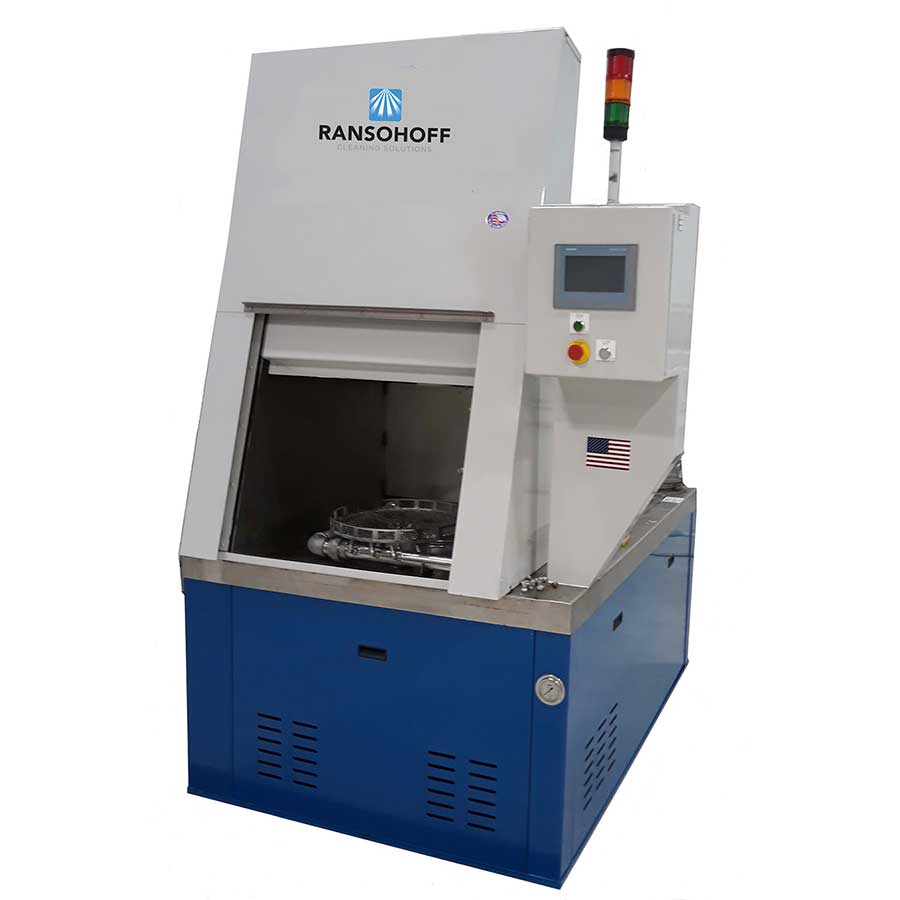
Key Takeaways
- The best industrial parts washer depends on part geometry, production volume, contamination type, and available floor space.
- Conveyor washers are ideal for continuous, high-volume production lines.
- Cabinet washers provide flexible batch cleaning for larger or mixed-part applications.
- Drum washers efficiently process large quantities of durable bulk parts such as stampings and fasteners.
- Basket washing systems offer exceptional flexibility for complex parts and multi-stage cleaning processes.
- Evaluating your production goals before purchasing a parts washer machine helps maximize throughput, cleaning quality, and long-term ROI.
Industrial cleaning is much more than removing oil, chips, or contaminants. The right cleaning system becomes an integral part of your manufacturing process, supporting downstream coating, assembly, inspection, and packaging operations.
Choosing the wrong industrial parts washer can create production bottlenecks, increase operating costs, and produce inconsistent cleaning results. Selecting the right machine starts with understanding how your parts move through production and what type of cleaning process best supports your operation.
This guide compares the four most common types of industrial parts washing equipment to help manufacturers identify the best solution for their application.
How to Evaluate an Industrial Parts Washer
Before comparing equipment styles, consider the factors that have the greatest impact on cleaning performance.
Part Geometry
The size, shape, weight, and complexity of your components determine how effectively the cleaning solution can reach every surface.
Consider questions such as:
- Are the parts flat or highly contoured?
- Do they contain blind holes or internal passages?
- Are they delicate or heavy-duty?
- Are they processed individually or in bulk?
Complex geometries often require different cleaning approaches than simple machined components.
Production Throughput
Production volume is one of the biggest drivers of equipment selection.
Ask yourself:
- How many parts are cleaned each hour?
- Does the cleaning system need to run continuously?
- Will production volumes increase in the future?
Sizing a washer for future growth often produces a stronger long-term return on investment than purchasing only for today’s production requirements.
Type of Contamination
Different contaminants require different cleaning strategies
Common manufacturing soils include:
- Machining oils
- Cutting fluids
- Metal chips
- Carbon deposits
- Buffing compounds
- Coolants
- Rust inhibitors
- Particulate debris
The contaminant often influences spray pressure, wash chemistry, temperature, filtration, and rinse requirements.
Available Floor Space
Manufacturing floor space is valuable.
When evaluating parts washing equipment, consider:
- Available footprint
- Material flow
- Loading and unloading access
- Utility connections
- Future production expansion
An efficient layout can improve workflow while minimizing labor.
Conveyor Industrial Parts Washer
A conveyor-style industrial parts washer is designed for continuous production.
Instead of loading batches manually, parts move automatically through wash, rinse, and drying stages while remaining in production flow.
Conveyor systems are ideal for:
- Automotive manufacturing
- High-volume machining
- Inline assembly operations
- Robotic production cells
Advantages include:
- Continuous throughput
- Reduced manual handling
- Consistent cleaning quality
- Easy automation integration
- High production efficiency
These systems work especially well when production speed is critical and cleaning must keep pace with the rest of the manufacturing line.
Cabinet Parts Washer Machine
A cabinet parts washer machine cleans one batch at a time inside an enclosed chamber while rotating spray nozzles thoroughly clean every surface.
Cabinet systems are an excellent choice when manufacturers process:
- Larger components
- Mixed part sizes
- Maintenance parts
- Lower production volumes
- Variable production schedules
Benefits include:
- Flexible batch processing
- Excellent cleaning consistency
- Simple operation
- Smaller installation footprint
- Lower capital investment than many automated systems
Many manufacturers choose cabinet washers because they offer an excellent balance between productivity and versatility.
Drum Parts Washing Equipment
Drum washers are specifically designed for cleaning large quantities of durable bulk parts.
Instead of placing individual parts on fixtures, components tumble through the cleaning cycle while spray systems remove contaminants.
Typical applications include:
- Fasteners
- Stampings
- Forgings
- Castings
- Small machined components
Advantages include:
- Extremely high throughput
- Minimal manual loading
- Efficient bulk processing
- Lower labor requirements
Drum systems are best suited for parts that can safely tumble without damage.
Basket Parts Washing Equipment
Basket washing systems clean parts while they remain securely contained inside removable baskets or carriers.
These systems are ideal when manufacturers require:
- Multiple cleaning stages
- Delicate component handling
- Flexible batch processing
- Improved part organization
Basket systems often include combinations of:
- Wash
- Rinse
- Ultrasonic cleaning
- Drying
- Rust prevention
Because parts remain together throughout the process, handling is reduced while cleaning consistency improves.
Which Industrial Parts Washer Is Right for Your Operation?
There is no universal answer because every manufacturing process is different.
The following comparison provides a helpful starting point.
| Requirement | Best Choice |
|---|---|
| Continuous high-volume production | Conveyor washer |
| Large individual components | Cabinet washer |
| Bulk small parts | Drum washer |
| Complex or delicate parts | Basket washer |
| Automation integration | Conveyor washer |
| Flexible batch processing | Cabinet or basket washer |
| Minimal operator involvement | Conveyor or drum washer |
| Limited floor space | Cabinet washer |
Many facilities also discover that combining multiple cleaning technologies across different production areas provides the greatest overall efficiency.
Beyond the Washer: Planning for Long-Term Performance
Selecting a parts washer machine involves much more than choosing equipment from a catalog.
Successful installations also consider:
- Future production growth
- Utility consumption
- Water and energy efficiency
- Automation compatibility
- Maintenance accessibility
- Service support
- Spare parts availability
- Process validation
Thinking beyond today’s production requirements helps maximize equipment life and reduce total cost of ownership.
Finding the Right Parts Washing Equipment Partner
Ransohoff works closely with manufacturers to match the right cleaning technology to each production environment. Rather than recommending a single solution, we evaluate your parts, contamination, throughput goals, available floor space, and automation requirements to determine the most effective system.
Our portfolio includes conveyor washers, cabinet washers, drum washers, basket washing systems, and fully integrated industrial parts washer solutions designed for demanding manufacturing environments. Whether you are replacing aging equipment, expanding production capacity, or designing a new automated line, our engineering team can help identify the right solution for your application.
If you’re evaluating industrial parts washing equipment, contact the Ransohoff team to discuss your production goals. We’ll help you select a cleaning system that improves throughput, delivers consistent cleaning performance, and supports your manufacturing operation for years to come.